Sunday, March 24, 2013

OTHELLO - STUDY NOTES AND QUESTIONS


Beginning study of Othello, Moor of Venice
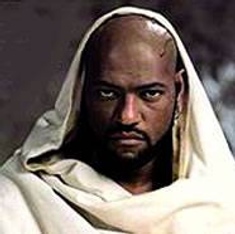
For more pictures and explanation refer to: Study Aid, with Visuals

For an interesting blog try this: OTHELLO, et. al.

You cannot discuss the characters, much less the plot, if you don't know what's going on. It is YOUR responsibility to find find a summary (for lack of a better word) of the play as a whole, and of each act. I will use the text of Shakespeare's play in class, with the focus on characters. You need to make sure you know WHO is WHO!! 


NOTE:  Classes are not "in sync." Be sure to read the post title.

Take what you already know about Shakespearean drama and add:

  The AUDIENCE- composed of:

groundlings or penny-stinkers

Important [in large part for the same reason audiences are important today] because:
To the playwright:

On stage, two conventions developed:

An Aside

A Soliloquy

While the sets and special effects were limited, great concern was placed on costumes because

Language because

On Shakespeare's tragic heroes:

“Like Greek tragic heroes, Shakespeare’s protagonists are exceptional human beings whose stature makes their misfortune all the more dramatic. These characters pay a high price for their actions. . . . all lead to irreversible results. . . . Tragic heroes confront devastation; they command our respect and compassion, because they act in spite of terrifying risks. Their triumph is not measured by the attainment of what they seek but by the wisdom that defeat imposes on them.” ~ Michael Meyer

* Practical help in reading Shakespeare:
1. Do not rely solely on Spark Notes or No Fear Shakespeare; use them as they were intended, but remember, in class, in your essay, you will not be using either study aid.
2. Refer frequently to the list of characters called the dramatis personae listed and briefly described at the beginning of the play; in Othello, there are several significant characters, as well as minor characters; be sure you are familiar with:
Othello Roderigo Bianca
Desdemona Cassio
Iago Emilia
3. Pay attention to footnotes or allusions in the drama; if you do not understand a reference AFTER reading BOTH the play and your choice of study aid, ASK, but make a genuine effort to figure it out first
4. Don’t just rely on written study aids; try finding an audio file  or recording of the play; hearing professional actors can enrich your understanding
5. AFTER reading the play, view a film of the performance. Try to resist the urge to watch a movie until after you have read the play; by then, perhaps, you will have formed your own ideas about the characters.
(NOTE: It is interesting to watch and listen to different actors to interpret the various roles--some may or may not fit a mental image you have of a particular character.)

Questions (from Michael Meyer, The Compact Bedford Introduction to Literature, 9th ed.):

1. Explain how Iago presents himself to the world. What is beneath the surface of his public identity? Why does he hate Othello so passionately? What makes Iago so effective at manipulating people? What do other characters, besides Othello, think of him?

2. Explain whether you think Othello could have protected himself from Iago’s schemes. What could Othello have done differently to avoid the suffering that ends the play? Is Iago to be blamed for everything, or must Othello shoulder some of the blame?

3. Explain why you think Othello’s racial background does or does not affect the events in the play.

4.  Describe how the two settings, Venice and Cyprus, reflect different social and psychological environments as well as different behavior among the characters.

5.  How does Othello change during the course of the play? Do you feel the same about him from beginning to end? Trace your response to his character as it develops, paying particular attention to Othello’s final speech.

6. Consider how women--Desdemona, Emilia, and  Bianca--are presented in the play. What characteristics do they have in common? How do they relate to the men in their lives?

7. Despite its grinding emotional impact and bleak ending, Othello does have its humorous moments. Locate a scene that includes humor and describe its tone and function in the play.


Monday, March 11, 2013

Oedipus - Questions, Quotes, and Spark Notes (Gasp!)


Before trying to understand either the Spark Notes or the play, it is ESSENTIAL that you understand the story of Oedipus, FIRST, even if the understanding comes from (gag!) wikipedia:
The Story of Oedipus.  Ideally, you can find a copy of Edith Hamilton's Mythology and read her account of the story. Though it is still the same story, Hamilton is the recognized authority on Greek and Roman myths.


What  Spark Notes says about the first 337 lines of Oedipus:
Sophocles’ audience knew the ancient story of Oedipus well, and would therefore interpret the greatness Oedipus exudes in the first scene as a tragic harbinger of his fall. Sophocles seizes every opportunity to exploit this dramatic irony. Oedipus frequently alludes to sight and blindness, creating many moments of dramatic irony, since the audience knows that it is Oedipus’s metaphorical blindness to the relationship between his past and his present situation that brings about his ruin. For example, when the old priest tells Oedipus that the people of Thebes are dying of the plague, Oedipus says that he could not fail to see this (68–72). Oedipus eagerly attempts to uncover the truth, acting decisively and scrupulously refusing to shield himself from the truth. Although we are able to see him as a mere puppet of fate, at some points, the irony is so magnified that it seems almost as if Oedipus brings catastrophe upon himself willingly. One such instance of this irony is when Oedipus proclaims proudly—but, for the audience, painfully—that he possesses the bed of the former king, and that marriage might have even created “blood-bonds” between him and Laius had Laius not been murdered (294–300).
Although the Chorus’s first ode (168–244) piously calls to the gods to save Thebes from the plague, the answer they get to their prayer arrives in human form. Immediately following the ode, Oedipus enters and says that he will answer the Chorus’s prayers. For a moment, Oedipus takes upon himself the role of a god—a role the Chorus has been both reluctant and eager to allow him (see 39–43). Oedipus is so competent in the affairs of men that he comes close to dismissing the gods, although he does not actually blaspheme, as Creon does in Antigone. At this early moment, we see Oedipus’s dangerous pride, which explains his willful blindness and, to a certain extent, justifies his downfall.

The only problem with the notes is that there are no specific lines or examples from the play itself. This analysis is limited in what it can provide, because the online analysis reflects the drama as a whole; it does not take into account the individual translation which is in a given text. Not all translations are the same.

Identify the speaker and the significance in the following lines from the Prologue:

 . . . I have come myself to hear you—
I, Oedipus, who bear the famous name.

 . . . Your own eyes
Must tell you: Thebes is in her extremity
And can not lift her head from the surge of death. . . .
You are not one of the immortal gods, we know,
Yet we have come to you to make our prayer
As to the man of all men best in adversity . . .

 . . . I have sent Creon . . .
To  Delphi, Apollo’s place of revelation.

Then once more I must bring what is dark to light. . . .
Whoever killed King Laios might—who knows?—
Decide at any moment to kill me as well.
By avenging the murdered king I protect myself.

What is the Parodos?  How does it differ from the Prologue?

Quotes and questions  from the Scene I:

Is this your prayer? It may be answered. Come.
Listen to me, act as the crisis demands,
And yo shall have relief from all these evils.
Until now I was a stranger to this tale,
As I had been a stranger to the crime.

What does Oedipus decree as the punishment for concealing the murderer?

Thus I associate myself with the oracle
And take the side of the murdered king
As for the criminal . . .
I pray that that man’s life be consumed in evil and wretchedness . . .

Identify at least 3 examples of dramatic irony between lines 40 – 60.

What evidence is there in this scene, between lines 60-70, that Oedipus is still loyal to the gods?

Explain the significance and irony of Teiresias being a blind seer.

In what way does Teiresias speak in riddles? (lines 100-105;109-110; 125-127)

Explain the sight imagery in these lines:
I say you live in hideous shame with those
Most dear to you.  You can not see the evil.

Explain the sight imagery and dramatic irony  in these lines:
You child of endless night! You can not hurt me
Or any other man who sees the sun.

Who does Oedipus accuse of betraying him and Thebes by murdering Laios?

Identify and explain the sight imagery and dramatic irony in Teiresias’s speech at the bottom of page 171.

What is Teiresias’ final prophecy?

What is an ode? Summarize in your own words Ode I, page 173.

Choose 3 of the following questions to answer in discussion format. Each answer should be written in no more than 1-2 paragraphs, with an opening, body, and conclusion. Do not concern yourself with a lengthy introduction, but a spot-on topic sentence that goes to the heart of the answer, which you will then support and explain.

Questions for Essay Test Spring 2013

  1. What is the point of the speech by the Choragos at the very end of the drama? In what way is Oedipus a cautionary tale?
  2. Compare and contrast the response of the Chorus to Tieresias with that of Oedipus’ response.
  3. Every literary work is, in some way, a product of its time and culture. What is revealed in this drama about Greek religion and its support of “moderation in all things”?
  4. Although he never makes an appearance in this play, which god is most prominent in this drama? Who are his “servants” in the drama, and how do they contribute to the discovery Oedipus makes of his own identity?
  5. Does Oedipus deserves the punishment he inflicts upon himself, or has he allowed his excessive nature and arrogance to again rule his rationality?
  6. At what point in the drama does Oedipus “cross the line” of propriety and allow his pride to become extreme, to exceed the limits of temperance?
  7. Which characters try to save Oedipus from himself? Why does he persist in his effort to find the truth? Is he acting on behalf of Thebes or is he completely self-centered in this?
  8. Choose a significant quote from the drama that contains both sight imagery and dramatic irony. Identify the speaker, the context of the quote, the sight imagery and dramatic irony within the quote, and explain why this quote is of such importance to the drama as a whole.


Thursday, February 21, 2013

Essay Topics for Tim O'Brien

Choose one of the following topics to analyze in a thoughtful, well-developed essay over one or both of Tim O'Brien's stories that we read.  Obviously, if you can develop a full essay based on evidence and analysis of only one story, that's fine; you may, however, use both stories to provide adequate examples and explanation  if necessary.

1.  In Tim O'Brien's stories of the Vietnam war,  storytelling is used more as a means to convey ideas, release emotions, and reflect on action that has taken place than to entertain.  Explain this statement, elaborate on its meaning and support it with examples and explanations from one or both stories. Consider the significance of storytelling to these storytellers.

2. Like life, war is a paradox.  Identify at least three or four of the most significant examples of paradox from  in one or both of Tim O'Brien's stories.  In what way is each conflicting statement true?  What is O'Brien's point in using these paradoxes? In what way is truth itself, at least in O'Brien's work, a paradox?  

3.  A catharsis refers to a release of emotions (often sadness, pity or fear) that would otherwise be suppressed.  In many cases, a catharsis allows an individual to feel cleansed or purged of detrimental emotions and better able to continue his journey.  While all the members of Alpha Company experience the sudden, violent deaths of their fellow soldiers, it is necessary for a number of them to take action that allows them to release their grief, anger, and heartbreak.  Who are they? What actions do they take? Are their actions beneficial to them or the rest of Alpha Company?  Explain. Explain. Explain. 

4. What is it that Rat Kiley, Mitch Sanders and the narrator seek in the stories they tell of Curt Lemon, the men in the mountains, and the war?  What are these men looking for in an audience (or reader)?  Why is "listening" so important to all three men?  


Wednesday, February 13, 2013

NOTES ON PLAGIARISM


From Purdue’s OWL: Plagiarism: the uncredited use (both intentional and unintentional) of somebody else's words or ideas.

The LEAST plagiarism does:
  • ·    Throws doubt on the authenticity of all further work done in a class by the individual
  • ·       Brings greater scrutiny to an entire class of papers—if one person plagiarized, then surely many more did, as well; these must also be found and rooted out
  • ·       Insults & angers the instructor (whether teacher or professor), sometimes forcing him/her to change intended plans for the entire class
Imagine two students:

One struggles with critical thinking, analysis, understanding a text and its implied and inferred meanings and works at every paper assigned to be written. It is an internal struggle and the greatest fear is failure. In desperation he decides, just this one time, to get help online. He scans Spark Notes, E-notes, Wikipedia, anything that turns up in Google that seems to be related to the assigned topic.  Now he knows he may be caught, he knows what he’s doing isn’t copacetic, but he takes the risk because he is desperate.

The second student is almost the polar opposite of the first student: she is intelligent, capable, considered “smart,” and the work she does, the analysis and understanding she grasps from the text appears to be genuine. Yet, from our study of irony, we know truths may be different from their appearance. This student is busy, works (on her own interests and concerns), and does not realize until the day before the paper is due that she may need help. The pressure is on. Her parents want her to do well; her peers expect her to do well; she wants to do well—because ultimately, for her, as with many students, what’s important is the grade at the end of the course. Learning? Critical thinking? Analysis? Oh, she can already do that; what she needs is some help in this paper.  Not much. Just a definition—maybe some clever phrasing. She could even reword it so it doesn’t “sound” like a reference page from the internet. She might also cobble together a paper from a few different sources, with some of her own transitions. That’s critical thinking, right? Evaluating the reference, analyzing what she can use and synthesizing it into her own paper.  All she wants is a good grade; everyone’s expecting it.

A third perspective:
The teacher/professor grades both students’ papers and sees the plagiarism. Both students fail—but the student who works, who struggles, who is desperate . . .the teacher feels some sympathy for. Not everyone is an English major, after all. The more capable student is given little sympathy, because ultimately, she wasn't that desperate, did not lack for ability or competence—she simply comes off as a  “smart,” but very lazy student.  This speaks volumes to the instructor, who ultimately seem bitter and disgusted, but is actually very disappointed.


Sunday, February 10, 2013

Notes After Grading the First Essay--More to Come

Except for the research essay, students can expect all future essays to be written in class. These will need to be written in blue or black ink and legible. You also have an option of bringing a laptop to class, composing on the laptop and emailing the paper to me when finished. I will make some allowances for the fact that you are facing a timed writing.

 A brief lesson on PLAGIARISM:


Plagiarism is more than simply copying verbatim; it is taking the ideas someone else has written, using them in one's own paper, with FAILURE to provide an internal citation, which indicates the full reference listed on the Works Cited Page.

Example:
 "The author says that Faith is “aptly named,” an ironic statement since she, later in the evening, is being received into the assembly of devil-worshippers as a new convert to the evil group."  ~ from 123helpme 
Used in a student's paper the quote became: "  . . . there is irony in the name of the character Faith. In the beginning she is described as a woman who is pure and youthful, with a name to match. Then later in the story she is seen at the altar worshiping the Devil."

Example:

"Irony is an important technique that writers often use to engage a reader's attention and often to help develop deeper levels of meaning in a text.  . . . when using irony a writer depends upon some form of 'shared understanding' between him or herself and the reader. For the irony to 'work' both writer and reader need to recognise that what is written is not quite what is meant . . . " ~ englishbiz.co.uk

Used in a student's paper the quote became: "Irony depends upon a 'shared understanding' between the reader and writer. Writers use irony to give subtle evidence that a deeper meaning is intended."

These two examples came from two different papers.

NOTE:  A serious problem with plagiarism is that even ONE confirmed instance of plagiarism (whether intentional or not)  throws doubt on all work submitted by the student.   PLAGIARISM IS NOT WORTH THE RISK. 
Refer to your syllabus for the penalty.
When you have to do a literary research paper, you will be expected to find relevant sources; in the meantime you should be the person analyzing, explaining, and making connections, NOT relying on paper mills or incomplete references. Notes taken in class, with what you should already know, along with the text should provide all that is necessary to write the first two essays.

ADDITIONAL NOTES:


1. NEVER write about something you do NOT fully understand. It is much better to take a topic that you understand and can analyze and fully support through specific detail from the text rather than take a topic and try to "bull****" your way through.
2. READ the stories about which you attempt to write. DO NOT rely on references about the story--particularly POOR references & think to "create" an adequate essay from them rather than spend time reading, analyzing, THINKING and writing.
3.  Make sure  you get the facts correct when you discuss and analyze the story. You have the book; you can take notes; you can refer to them. I have no sympathy for anyone who writes blatantly erroneous sentences like:
Mrs. Hopewell was blessed with three daughters, Joy, Glynese, and Carramae.

Wednesday, February 6, 2013

Questions over "The Things They Carried" by Tim O'Brien

The numbers below will vary, depending on which 1102 class you are in; they are, however, the same questions and will serve as our guide to discussion and as a study reference before the quiz. I appreciate the effort all of you made to deliver your work on time; this will be considered part of your daily grade/class participation for the semester. I've added a few comments in purple to some--but not all--of the answers. If a question has been raised by the student, it is in blue. I have identified no one by name nor have I indicated whether the answer is "right" or "wrong" or "complete." We will discuss these in class. 

  1.  What did the soldiers carry out of the story/war?                                              Some soldiers carried things because of superstition. Lieutenant Cross carried his good luck pebble. Dave Jensen carried a rabbit’s foot and Norman Bowker carried a thumb that he got from a teenage kid.  For each different mission the soldiers would carry different things. When they went up to the mountains they carried carried mosquito netting, machetes, canvas tarps and bug juice. When they went on search and destroy missions the carried blocks, high explosives, wiring detonators and battery powered clackers.  For ambush missions the each took different things. Kiowa took his New Testament and pair of moccasins. Dave Jensen took night sight vitamins. Lee Strunk took a slingshot and ammo. Rat Kiley took M&M’s. Ted Lavender took a starlight scope.They soldiers carried more than tangible items amongst themselves. They carried a lot of diseases with them such as malaria and dysentery. They carried the land itself, Vietnam the place and its soil. They carried gravity; they were moving like mules and the carried their own lives.  These are all items they carried into the war. What did they carry OUT of the war, based on what you read in the story. Note: while it is easier to find direct quotations from the story to support your thesis, attempting to quote verbatim is not always the best answer to a question like this.  THIS question required critical thinking and inference, after reading the story.
  2. Identify Martha. What does the reader learn about her--get as much detail on Martha as possible?                                                                                                  Lieutenant Cross had love problems, he loved Martha but he did not know if she loved him back. This love affected him greatly mostly his decision making in combat. When one of his platoon soldier died he blamed himself, saying his thought and love for Martha clouded his mind and had a solider killed.Martha was a English major at Mount Sebastian, she wrote letters to Lieutenant Jimmy Cross. She never asked or mentioned the war when writing to him, except saying, "take care of yourself". Martha gave Jimmy a pebble she found at the jersey shoreline for good luck. She played volleyball and Jimmy often thought about that image of her standing there. Cross realized near the end that she did not love him and probably never would. So at the end he tried to erase all memories of her and focus more on the mission and of the loves of his platoon.
  3. In what way is this a "war" story?                                                                                                   This is a war story because mainly the story is about the Vietnam war. He talks about the missions they have during the war, and all of the different things they do on a daily basis. He talks about the soldiers and the different things each of them carry.
  4. In what is this much more than a "war story?                                                          It is much more than a war story because the story analyzes the individuals. It really focuses on some their faults, history, and personality. The stories shows how human act when they are encountered with certain situations. It's important to consider what is meant by those "certain situations" and how this relates to this story. Also--complete  the answer for this question AFTER you (and everyone else) has read "How to Tell a True War Story."
5-11. What each soldier carries is both the same as every other soldier and different from every other soldier. Explain how thise different items define the role of each man in the unit; next, what inferences can be drawn about each man from his personal items?

5.  Jimmy Cross

What all the soldiers carry together defines them all as a group and brings them unity. However, what each soldier separately carries defines him as an individual and makes him an asset to the group and to the unity developed by each of their unique characteristics and things. Jimmy Cross is the leader and lieutenant of the unit. He carries love letters, 2 photographs, and a pebble from a woman named Martha. The two are not in love, but these letters and photographs are Jimmy Cross' outlet from the horrors of war surrounding him. These items define Jimmy Cross as a man who longs for love and a life beyond the boundaries war has created for him.Jimmy Cross somewhat isolates himself from the rest of the unit and does not seem to relate easily with the other men, but the compassion he displays in privacy for Martha is an emotion seldom found in war and this serves as a big asset as bringing the unit together as a whole. He is the leader, but he is blinded by love and eventually this blindness costs a man's life. This evidence shows that Jimmy Cross is a man that leads with emotion and does not see that the fantasies he is carrying is distracting him from the lives of men he is carrying. 
6.  Henry Dobbins
7.  Kiowa   
Kiowa- Kiowa carries an illustrated New Testament bible, his grandmother’s distrust of the white man, his grandfather’s old hunting hatchet, and a pair of moccasins.  Kiowa’s items seem to point out that Kiowa’s role was just that of a faithful soldier.  It can be inferred that Kiowa is an Indian, has high regard for his ancestors/family, holds a distrust of white men, and has faith in Christianity/his bible.
Side Note- I am confused about the wording when Kiowa’s items are being described. The sentence reads, “As a hedge against bad times, however, Kiowa also carried his grandmother’s distrust of the white man, his grandfather’s old hunting hatchet.” I was wondering if the hatchet was a symbol for the grandmother’s distrust for the white man that Kiowa carried or if the hatchet and distrust were two separate things? 

8.  Rat Kiley - ????


9.  Mitchell Sanders


In the "The Things They Carried", My in inference on Mitchell Sanders based on his personal belongings is that he is a "lades man" considering he carries condoms(1037) and starched tiger fatigues(1042).
Also based on his gear (PRC-25 radio) I learned that his role in the platoon was an RTO (radio telephone operator). I believe this illustrates Sanders as an intelligent communicator who gets along with his platoon. In addition, I concluded that his gear fulfills his personality in that he has a compulsion to "communicating" a "simple" moral to all scenarios of war such as the VC lying dead in the road(1042) and Tim Lavender's death(1046).

10. Norman Bowker - ????
11. the narrator - ????

12. What word (other than "carry" or "carried" is used repeatedly in the story? Why?

In Things They carried, the word things is repeated throughout the passage.Things is repeated to show just how much the soldiers had to carry in addition to military essentials. Things were not only physical but mental. Example of this is fear.  Another word repeated and repeated in the story is "WEIGHT."  The word is a constant reminder of _______ as well as ______.

13.  Explain paragraph 4--especially the ending of paragraph 4.                                    Lieutenant Cross had love problems, he loved Martha but he did not know if she loved him back. This love affected him greatly mostly his decision making in combat. When one of his platoon soldier died he blamed himself, saying his thought and love for Martha clouded his mind and had a solider killed.

Martha was a English major at Mount Sebastian, she wrote letters to Lieutenant Jimmy Cross. She never asked or mentioned the war when writing to him, except saying, "take care of yourself". Martha gave Jimmy a pebble she found at the jersey shoreline for good luck. She played volleyball and Jimmy often thought about that image of her standing there. Cross realized near the end that she did not love him and probably never would. So at the end he tried to erase all memories of her and focus more on the mission and of the loves of his platoon.

14. Why does the narrator take an almost casual tone in reference to Ted Lavendar and his death?                                                                                                                      The narrator takes an almost casual tone in reference to the death of Ted Lavendar because throughout the men's time in war they witness deaths' everyday. But these men were strong.  In this story there were two phrases that help support. The first was "they were tough." (1046). The men were tough, they saw this on a daily basis. They could not let this event bring them down or they would not be able to complete the task. The second was " By and large they carried these things inside, maintaining the mask of composure." (1046).  While the men might have been hurting on the inside they put on a face that masked the hurt in order to be able to keep going.


15. What two items in the story both weigh 10 ounces each? What ay be significant about that?

Question 15: Two things that weighed 10 ounces in the story were the letters that Martha wrote him, and a single round of the M-79 grenade launcher. What is significant about this is the fact that he loved Martha, and he wanted more out of her than just her friendship. The M-79 was a form of weapons. When using weapons, they had to choose the appropriate weapon to get the job done which would allow the soldiers to kill their oponents and stay alive. In both situations they had to play it safe, in order not to get hurt.

16. What is Kiowa's response to Lavendar's death?  (NOT what Kiowa says, but his response afterward) What is Norman Bowker's response? What does this suggest about the catharsis that is needed after Lavendar's death?


17. In lieu of funeral customs/traditions, waht do the men do?


18. What sacrifice does Cross make? Why?


19. What was the soldiers' greatest fear? Why?   

They carried the soldier’s greatest fear, which was the fear of blushing. Men killed, and died, because they were embarrassed not to. It was what had brought them to the war in the first place, nothing positive, no dreams of glory or honor, just to avoid the blush of dishonor. They died so as not to die of embarrassment.  Again, provide a specific example from the story IN YOUR OWN WORDS, not in those of a quote from the story.  

Find the followng quotes on the pages noted and explain what they mean in the context of the story and the significance of each:


20. "They carried all they could bear . . . " (1039).


21. "They all carried ghosts" (1040). .                                                                                                   When the author, Tim O’Brien, states, “They all carried ghosts,” I believe he was talking about the people they carried in their hearts and mind wherever they went. Kiowa took God with the bible he carried; Henry Dobbins carried around his girlfriend that he couldn’t hold every night; The other men probably carried spouses, children, parents, or even someone they might have killed while in war.


22. "They carried all the emotional baggage . . . " (1046).

Monday, February 4, 2013

Writing About Literature


Writing about literature is different from most essays that are assigned and written in English 1101. For one thing, the focus of the paper is on the analysis of the story, poem or play that has been assigned. Therefore, it is written in third person; there should be no first ("I") or second person ("you"). There are other important differences outlined below. 

CONTENT 

1. Always mention the title and author of the work(s) you are discussing early in your essay. Titles of  stories should be in quotation marks.

2. Mention characters' names whenever possible. Be specific about character identification; that is, when you first refer to a character, add a simple appositive phrase to identify him or her. It does not have to be long nor interrupt the “flow” of your writing. Example:
In Tim O’Brien’s “The Things They Carried,” Kiowa, a soldier from Oklahoma, carries the New Testament and a hatchet, each representative of his mixed heritage.

3. Use illustrations, examples, and explanations to prove your assertions. Stick closely to the text of the work you are discussing. Read carefully and closely. Don't hesitate to quote briefly from the primary source for illustration -- a well-chosen quote can help to illustrate your point. However, be sure to use the quote as illustration -- not as the text of your essay.

4. Clearly state the central idea or thesis of your essay in the introduction. Be sure your essay has a thesis. Do NOT state your thesis by using writer-based phrases such as: The two poems I have chosen to write about are.... Rather, focus directly on your point: The snake is a potent symbol, often invoking fear, in Western mythology. Both Emily Dickinson and D. H. Lawrence invoke that fear in their poems, but with very different results.

5. Look up the definition of any word that you are not totally familiar with. Try to find the source of and understand any literary or historical allusion that the author uses.

6. Underline key passages, even key words, in the work you are studying, particularly those passages that have reference to your thesis. Be sure that any time you quote form an author's work, you quote exactly -- word for word and comma for comma.

7. In an essay about literature, it is most important to try to show your understanding of the work. Concentrate on writing a unified essay around a central thesis. Avoid going off on tangents. Stick to your main idea, develop it, prove it, deepen it by showing implications of your idea. Use class discussion as a springboard, but do not hesitate to go more deeply into the analysis. You may have been hesitant to speak in class, but do not be hesitant to incorporate your own thoughts and ideas into the paper.

8. Don't confuse the author with the narrator of the story or the voice of the poem.

MLA FORMAT: 

 Double space all work, unless otherwise directed. Use a 12 point, non-italic, common/plain font such as Times New Roman, Garamond, Courier, or Comic Sans. Center your title. Follow MLA Guidelines for essay set-up.
 When you first refer to authors, use their full names; afterwards refer to them by last names.

 Use present tense verbs when writing about literature and maintain verb consistency. 

 Incorporate quoted material into your writing in one of 3 ways: 

(1) Interweave it into your own words: Poe’s use of the words “dark, “ ”dreary,” and “weary” suggests a somber mood (lines 11-13). 
(2) Introduce it with a “tag phrase” and comma: As Creon says, “The ship of state is safe” (I.8). 
(3) Introduce it with an explanatory sentence and colon: At the beginning of the play, Creon is concerned that the country is unified: “The ship of state is safe” (I.8). 

 Document poems by line number; document plays by Act, Scene, and Line; document short stories by page number. 

 When the quotation is followed by the parenthetical documentation, place periods and commas after the parenthesis. If the quote contains a question mark or exclamation point, it remains before the quotation marks, but a period (or comma) is still placed after the parenthesis. 

Sammy asks, “Who is that customer?” (36).

Granny Weatherall says, “Nonsense” (177). 

When the quotation marks are not followed by the parenthesis, then commas and periods go before the quotation mark. 

 Use single quotation marks to quote a quotation within a quotation. 

 Use slashes ( / ) to indicate the end of a line of poetry when you run the lines together in your own writing: “My young brother’s house is filled / I go there to sing / We have not spoken of you/ but our songs are sad” (lines 13-16). 

Papers should be free of grammatical, mechanical, and punctuation errors: avoid comma splices, fragments, fused sentences; make sure subject/verb and noun/pronoun agree in number; use correct spelling; follow conventions of punctuation and capitalization (especially apostrophes).