Sunday, April 7, 2013

Lines, Notes, Questions AND an IMPORTANT Revelation


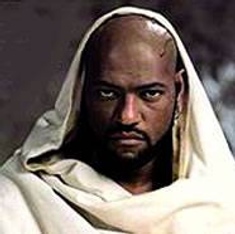
Othello

It's important to realize that it is NOT simply adequate to understand the plot, but to be able to consider deeper questions, once you"get" what's going on in the drama. 
For example:
What insecurities trigger Othello's jealousy?
What do the words and actions of the women in the play reveal about the role of women, in general, at this time?
How would the action in the play be different if there were no Rodrigo and Cassio?
What prompts Iago's jealousy? What prompts his misogyny?
How do Iago's soliloquies, as well as remarks by other characters to him and the audience, create dramatic irony in the drama?
How does dramatic irony create interaction between the players and the audience?


Act I: characters are introduced, defined, background/groundwork laid for the action that is to come; if a play  were a painting, this would be the initial sketch, with the focal point identified, but little else
Act I, sc. i
Lines: 7-23; 35-36; 41-64; 95-99; 111-114; 150-153;
Act I, sc. ii
Lines: 3-4;62-79;
Act I, sc. iii
Lines: 48-52; 128-170; 180-188; 287-299;309-381;
Act II: “the plot thickens,” the initial conflict is established, with the antagonist divulging his scheme to the audience, but to no one else; in doing so, he demonstrates his ability to manipulate other characters and fully establishes his role; in this act, the dark and light values and the underpainting is created—the “painting” is become clear, but not fully whole yet.
Act II, sc. i
Cassio’s concern for Othello, his respect for Desdemona, his manners toward Emilia: 1-100; examples of Iago’s  misogyny: 110-158; importance of Iago’s asides: 164-171; 194-196 (again, dramatic irony in the term honest Iago); Iago again uses Roderigo; Iago’s soliloquy: 259-285
Act II, sc. ii
Othello’s trust: 6-10; Iago’s continued scheme, involving Cassio: 35-52—note what happens and how this involves Roderigo; 152-162; dramatic irony in Iago’s lines: 196-200+; Cassio’s punishment leads to his reaction, followed by Iago’s advice; Iago’s soliloquy: 290-315
Act III: THE TURNING POINT; after this act, the “dye is cast;” not only does Iago involve Roderigo in his machinations, but his unsuspecting wife, Emilia, as well; more importantly, Othello succumbs to the scheme laid by “honest Iago” and to his own insecure, jealous nature; the painting Shakespeare began in Act I now has greater development, the mid-values, greater definition in the focal point and clarity
Act III, sc. I; sc. ii
Note what Cassio thinks of Iago: 36-38; Iago begins to suggest Cassio’s involvement with Desdemona, 35-40;
Act III, sc. iii
93- 275; note that Desdemona unwittingly falls directly into Iago’s plan; note the cause of Othello’s headache and of Desdemona’s “napkin” that she drops; Iago’s plan: 320-329; Othello’s internal conflict: 335-363;384-390; note what Othello DEMANDS of Iago: 399; note the dramatic irony that Act III, sc. iii ends with
Act III, sc. iv
Explain the argument between Othello and Desdemona that opens this scene and that between Bianca and Cassio; obviously, note the role the handkerchief plays between both couples


Wednesday, April 3, 2013

Not that you're lazy, but . . .

It's not a difficult summary to read, but, when all else fails, watch the cartoon:
Othello: the cartoon (Lawsy, lawsy, lawsy!!)

(Sorry--couldn't get the video to post on this one)

Please know that this does not excuse you from READING

Monday, April 1, 2013

OTHELLO - VIDEOS


Othello: in three minutes or less (actually, it is the trailer for the movie). I do suggest you watch the film; the language is difficult for you, but, like any foreign-sounding language, the more you listen, the more understand. The first time you watch it, you won't "get it," but you will, if you listen well and make a concerted effort.

Don't hesitate to use YouTube to find more videos of the play.


Iago's Monologue -- in which he explains how he plans to "ensnare" them all in his "web"

Sunday, March 24, 2013

OTHELLO - STUDY NOTES AND QUESTIONS


Beginning study of Othello, Moor of Venice

For more pictures and explanation refer to: Study Aid, with Visuals

For an interesting blog try this: OTHELLO, et. al.

You cannot discuss the characters, much less the plot, if you don't know what's going on. It is YOUR responsibility to find find a summary (for lack of a better word) of the play as a whole, and of each act. I will use the text of Shakespeare's play in class, with the focus on characters. You need to make sure you know WHO is WHO!! 


NOTE:  Classes are not "in sync." Be sure to read the post title.

Take what you already know about Shakespearean drama and add:

  The AUDIENCE- composed of:

groundlings or penny-stinkers

Important [in large part for the same reason audiences are important today] because:
To the playwright:

On stage, two conventions developed:

An Aside

A Soliloquy

While the sets and special effects were limited, great concern was placed on costumes because

Language because

On Shakespeare's tragic heroes:

“Like Greek tragic heroes, Shakespeare’s protagonists are exceptional human beings whose stature makes their misfortune all the more dramatic. These characters pay a high price for their actions. . . . all lead to irreversible results. . . . Tragic heroes confront devastation; they command our respect and compassion, because they act in spite of terrifying risks. Their triumph is not measured by the attainment of what they seek but by the wisdom that defeat imposes on them.” ~ Michael Meyer

* Practical help in reading Shakespeare:
1. Do not rely solely on Spark Notes or No Fear Shakespeare; use them as they were intended, but remember, in class, in your essay, you will not be using either study aid.
2. Refer frequently to the list of characters called the dramatis personae listed and briefly described at the beginning of the play; in Othello, there are several significant characters, as well as minor characters; be sure you are familiar with:
Othello Roderigo Bianca
Desdemona Cassio
Iago Emilia
3. Pay attention to footnotes or allusions in the drama; if you do not understand a reference AFTER reading BOTH the play and your choice of study aid, ASK, but make a genuine effort to figure it out first
4. Don’t just rely on written study aids; try finding an audio file  or recording of the play; hearing professional actors can enrich your understanding
5. AFTER reading the play, view a film of the performance. Try to resist the urge to watch a movie until after you have read the play; by then, perhaps, you will have formed your own ideas about the characters.
(NOTE: It is interesting to watch and listen to different actors to interpret the various roles--some may or may not fit a mental image you have of a particular character.)

Questions (from Michael Meyer, The Compact Bedford Introduction to Literature, 9th ed.):

1. Explain how Iago presents himself to the world. What is beneath the surface of his public identity? Why does he hate Othello so passionately? What makes Iago so effective at manipulating people? What do other characters, besides Othello, think of him?

2. Explain whether you think Othello could have protected himself from Iago’s schemes. What could Othello have done differently to avoid the suffering that ends the play? Is Iago to be blamed for everything, or must Othello shoulder some of the blame?

3. Explain why you think Othello’s racial background does or does not affect the events in the play.

4.  Describe how the two settings, Venice and Cyprus, reflect different social and psychological environments as well as different behavior among the characters.

5.  How does Othello change during the course of the play? Do you feel the same about him from beginning to end? Trace your response to his character as it develops, paying particular attention to Othello’s final speech.

6. Consider how women--Desdemona, Emilia, and  Bianca--are presented in the play. What characteristics do they have in common? How do they relate to the men in their lives?

7. Despite its grinding emotional impact and bleak ending, Othello does have its humorous moments. Locate a scene that includes humor and describe its tone and function in the play.


Monday, March 11, 2013

Oedipus - Questions, Quotes, and Spark Notes (Gasp!)


Before trying to understand either the Spark Notes or the play, it is ESSENTIAL that you understand the story of Oedipus, FIRST, even if the understanding comes from (gag!) wikipedia:
The Story of Oedipus.  Ideally, you can find a copy of Edith Hamilton's Mythology and read her account of the story. Though it is still the same story, Hamilton is the recognized authority on Greek and Roman myths.


What  Spark Notes says about the first 337 lines of Oedipus:
Sophocles’ audience knew the ancient story of Oedipus well, and would therefore interpret the greatness Oedipus exudes in the first scene as a tragic harbinger of his fall. Sophocles seizes every opportunity to exploit this dramatic irony. Oedipus frequently alludes to sight and blindness, creating many moments of dramatic irony, since the audience knows that it is Oedipus’s metaphorical blindness to the relationship between his past and his present situation that brings about his ruin. For example, when the old priest tells Oedipus that the people of Thebes are dying of the plague, Oedipus says that he could not fail to see this (68–72). Oedipus eagerly attempts to uncover the truth, acting decisively and scrupulously refusing to shield himself from the truth. Although we are able to see him as a mere puppet of fate, at some points, the irony is so magnified that it seems almost as if Oedipus brings catastrophe upon himself willingly. One such instance of this irony is when Oedipus proclaims proudly—but, for the audience, painfully—that he possesses the bed of the former king, and that marriage might have even created “blood-bonds” between him and Laius had Laius not been murdered (294–300).
Although the Chorus’s first ode (168–244) piously calls to the gods to save Thebes from the plague, the answer they get to their prayer arrives in human form. Immediately following the ode, Oedipus enters and says that he will answer the Chorus’s prayers. For a moment, Oedipus takes upon himself the role of a god—a role the Chorus has been both reluctant and eager to allow him (see 39–43). Oedipus is so competent in the affairs of men that he comes close to dismissing the gods, although he does not actually blaspheme, as Creon does in Antigone. At this early moment, we see Oedipus’s dangerous pride, which explains his willful blindness and, to a certain extent, justifies his downfall.

The only problem with the notes is that there are no specific lines or examples from the play itself. This analysis is limited in what it can provide, because the online analysis reflects the drama as a whole; it does not take into account the individual translation which is in a given text. Not all translations are the same.

Identify the speaker and the significance in the following lines from the Prologue:

 . . . I have come myself to hear you—
I, Oedipus, who bear the famous name.

 . . . Your own eyes
Must tell you: Thebes is in her extremity
And can not lift her head from the surge of death. . . .
You are not one of the immortal gods, we know,
Yet we have come to you to make our prayer
As to the man of all men best in adversity . . .

 . . . I have sent Creon . . .
To  Delphi, Apollo’s place of revelation.

Then once more I must bring what is dark to light. . . .
Whoever killed King Laios might—who knows?—
Decide at any moment to kill me as well.
By avenging the murdered king I protect myself.

What is the Parodos?  How does it differ from the Prologue?

Quotes and questions  from the Scene I:

Is this your prayer? It may be answered. Come.
Listen to me, act as the crisis demands,
And yo shall have relief from all these evils.
Until now I was a stranger to this tale,
As I had been a stranger to the crime.

What does Oedipus decree as the punishment for concealing the murderer?

Thus I associate myself with the oracle
And take the side of the murdered king
As for the criminal . . .
I pray that that man’s life be consumed in evil and wretchedness . . .

Identify at least 3 examples of dramatic irony between lines 40 – 60.

What evidence is there in this scene, between lines 60-70, that Oedipus is still loyal to the gods?

Explain the significance and irony of Teiresias being a blind seer.

In what way does Teiresias speak in riddles? (lines 100-105;109-110; 125-127)

Explain the sight imagery in these lines:
I say you live in hideous shame with those
Most dear to you.  You can not see the evil.

Explain the sight imagery and dramatic irony  in these lines:
You child of endless night! You can not hurt me
Or any other man who sees the sun.

Who does Oedipus accuse of betraying him and Thebes by murdering Laios?

Identify and explain the sight imagery and dramatic irony in Teiresias’s speech at the bottom of page 171.

What is Teiresias’ final prophecy?

What is an ode? Summarize in your own words Ode I, page 173.

Choose 3 of the following questions to answer in discussion format. Each answer should be written in no more than 1-2 paragraphs, with an opening, body, and conclusion. Do not concern yourself with a lengthy introduction, but a spot-on topic sentence that goes to the heart of the answer, which you will then support and explain.

Questions for Essay Test Spring 2013

  1. What is the point of the speech by the Choragos at the very end of the drama? In what way is Oedipus a cautionary tale?
  2. Compare and contrast the response of the Chorus to Tieresias with that of Oedipus’ response.
  3. Every literary work is, in some way, a product of its time and culture. What is revealed in this drama about Greek religion and its support of “moderation in all things”?
  4. Although he never makes an appearance in this play, which god is most prominent in this drama? Who are his “servants” in the drama, and how do they contribute to the discovery Oedipus makes of his own identity?
  5. Does Oedipus deserves the punishment he inflicts upon himself, or has he allowed his excessive nature and arrogance to again rule his rationality?
  6. At what point in the drama does Oedipus “cross the line” of propriety and allow his pride to become extreme, to exceed the limits of temperance?
  7. Which characters try to save Oedipus from himself? Why does he persist in his effort to find the truth? Is he acting on behalf of Thebes or is he completely self-centered in this?
  8. Choose a significant quote from the drama that contains both sight imagery and dramatic irony. Identify the speaker, the context of the quote, the sight imagery and dramatic irony within the quote, and explain why this quote is of such importance to the drama as a whole.


Thursday, February 21, 2013

Essay Topics for Tim O'Brien

Choose one of the following topics to analyze in a thoughtful, well-developed essay over one or both of Tim O'Brien's stories that we read.  Obviously, if you can develop a full essay based on evidence and analysis of only one story, that's fine; you may, however, use both stories to provide adequate examples and explanation  if necessary.

1.  In Tim O'Brien's stories of the Vietnam war,  storytelling is used more as a means to convey ideas, release emotions, and reflect on action that has taken place than to entertain.  Explain this statement, elaborate on its meaning and support it with examples and explanations from one or both stories. Consider the significance of storytelling to these storytellers.

2. Like life, war is a paradox.  Identify at least three or four of the most significant examples of paradox from  in one or both of Tim O'Brien's stories.  In what way is each conflicting statement true?  What is O'Brien's point in using these paradoxes? In what way is truth itself, at least in O'Brien's work, a paradox?  

3.  A catharsis refers to a release of emotions (often sadness, pity or fear) that would otherwise be suppressed.  In many cases, a catharsis allows an individual to feel cleansed or purged of detrimental emotions and better able to continue his journey.  While all the members of Alpha Company experience the sudden, violent deaths of their fellow soldiers, it is necessary for a number of them to take action that allows them to release their grief, anger, and heartbreak.  Who are they? What actions do they take? Are their actions beneficial to them or the rest of Alpha Company?  Explain. Explain. Explain. 

4. What is it that Rat Kiley, Mitch Sanders and the narrator seek in the stories they tell of Curt Lemon, the men in the mountains, and the war?  What are these men looking for in an audience (or reader)?  Why is "listening" so important to all three men?  


Wednesday, February 13, 2013

NOTES ON PLAGIARISM


From Purdue’s OWL: Plagiarism: the uncredited use (both intentional and unintentional) of somebody else's words or ideas.

The LEAST plagiarism does:
  • ·    Throws doubt on the authenticity of all further work done in a class by the individual
  • ·       Brings greater scrutiny to an entire class of papers—if one person plagiarized, then surely many more did, as well; these must also be found and rooted out
  • ·       Insults & angers the instructor (whether teacher or professor), sometimes forcing him/her to change intended plans for the entire class
Imagine two students:

One struggles with critical thinking, analysis, understanding a text and its implied and inferred meanings and works at every paper assigned to be written. It is an internal struggle and the greatest fear is failure. In desperation he decides, just this one time, to get help online. He scans Spark Notes, E-notes, Wikipedia, anything that turns up in Google that seems to be related to the assigned topic.  Now he knows he may be caught, he knows what he’s doing isn’t copacetic, but he takes the risk because he is desperate.

The second student is almost the polar opposite of the first student: she is intelligent, capable, considered “smart,” and the work she does, the analysis and understanding she grasps from the text appears to be genuine. Yet, from our study of irony, we know truths may be different from their appearance. This student is busy, works (on her own interests and concerns), and does not realize until the day before the paper is due that she may need help. The pressure is on. Her parents want her to do well; her peers expect her to do well; she wants to do well—because ultimately, for her, as with many students, what’s important is the grade at the end of the course. Learning? Critical thinking? Analysis? Oh, she can already do that; what she needs is some help in this paper.  Not much. Just a definition—maybe some clever phrasing. She could even reword it so it doesn’t “sound” like a reference page from the internet. She might also cobble together a paper from a few different sources, with some of her own transitions. That’s critical thinking, right? Evaluating the reference, analyzing what she can use and synthesizing it into her own paper.  All she wants is a good grade; everyone’s expecting it.

A third perspective:
The teacher/professor grades both students’ papers and sees the plagiarism. Both students fail—but the student who works, who struggles, who is desperate . . .the teacher feels some sympathy for. Not everyone is an English major, after all. The more capable student is given little sympathy, because ultimately, she wasn't that desperate, did not lack for ability or competence—she simply comes off as a  “smart,” but very lazy student.  This speaks volumes to the instructor, who ultimately seem bitter and disgusted, but is actually very disappointed.