Final Exam for the Macon - English 1102:
Monday, May 6th - 1- 3 p.m.
OVER POETRY
Terms you will need to know:
diction
the difference between denotation and connotation
imagery - please realize it deals with ALL the senses
symbol
irony
how does the speaker of a poem differ from the poet? does the speaker have a particular point of view?
does the speaker direct his words to a particular audience?
does the poem have a setting? if it does, what is it and why is it important?
how does the poem relate to human experience, as a whole?
what figurative language is used the poem? for what purpose?
what shifts or changes occur in the poem?
Monday, April 22, 2013

Sunday, April 21, 2013
Essay Topics on OTHELLO
NOTE: Since I was late getting the topics posted, you may turn your papers in a week from this Monday, on April 29th, which is the last "regular" class day.
Select one of the following for an essay on Othello. Like previous papers, this one should be at least 3 pages. Make sure the evidence for this essay is traced from the first act through the last of the drama. Quotes are strongly encouraged for this paper, as it counts 20% of your final grade. When quoting from drama refer to the third example on the following website:
Citing Lines from Shakespeare
JEALOUSY: Jealousy, the “green eye’d monster,” its causes and consequences is at the heart of Shakespeare’s Othello. Not only is the “valiant Moor” stricken with the malady that ruins his life, but so are other major--and minor--characters in the play, specifically Iago, Roderigo, and Bianca. Discuss the insecurity within each of these characters that leads to his/her jealousy, the actions each character takes because of the jealousy and the ultimate consequence that his/her action engenders.
DESDEMONA‘S CHARMS: “A guiltless death I die,” swears Desdemona, and, indeed, the audience knows she has never been “false” to her husband or had an immoral relationship with Cassio. Nevertheless, what actions, beginning in the first act and carried throughout the drama, does Desdemona commit that help to seal her fate? Why does her feminine appeal at first charm her husband, then contribute to her undoing?
IN DEFENSE OF IAGO: Iago is the mastermind of Shakespeare’s drama, the puppet master who manipulates willing victims with his eloquence and articulation. There is no doubt of his evil, of his schemes, of his wicked intentions from Act I. Shortly after Othello has murdered the fair Desdemona, Iago is exposed by his wife, who is immediately dispatched [killed] by her husband, who then has no more words for the Moor, the men of Cyprus, or the audience. At some point Iago would be brought to a court and no doubt there would be someone to plead the case for “honest Iago.” Assume the role of Iago’s defender and--excluding a plea for insanity--provide an explanation for Iago’s actions and an argument to defend his actions.
ET TU, AUDIENCE: Many of the most enjoyed dramas are those in which the audience is in some way involved, in which they feel connected to the action of the characters on stage. In some ways, Shakespeare uses Iago to manipulate the audience, as well as the characters on stage, through Iago’s soliloquies and asides throughout the plays. Trace Iago’s speeches to the audience from Act I through Act V. How does Iago create interest and suspense in the audience, as well as dramatic irony? Why are his speeches both enlightening and horrifying to the audience? Why does the audience follow Iago’s actions and words more closely than any other character in the drama?
Tuesday, April 16, 2013
An Introduction to Poetry
Is poetry really that “hard” or are we just “lazy”? Why?
We like our language clear and straight to the point. We like our stories and plays to be entertaining and to be easily understood. We expect to put in time to be able to understand symbolism and irony in either fiction or drama—why don’t we expect a poem to take an equal amount of time? We associate “short” with easy. Why?
Consider the following short, humorous poem; is there a serious statement underlying the wit of the couplet? Yes. What else is the speaker saying?
Consider the following short, humorous poem; is there a serious statement underlying the wit of the couplet? Yes. What else is the speaker saying?
Fleas
Adam
Had 'em.
Poetry is often short, but it is far from easy. Take the following poem by Emily Dickinson:
Much Madness is divinest Sense -
To a discerning Eye -
Much Sense - the starkest Madness -
`Tis the Majority
In this, as All, prevail -
To a discerning Eye -
Much Sense - the starkest Madness -
`Tis the Majority
In this, as All, prevail -
Assent - and you are sane -
Demur - you`re straightaway dangerous -
And handled with a Chain –
Demur - you`re straightaway dangerous -
And handled with a Chain –
Understanding the vocabulary in a poem is critically important. If there are ANY words you don’t know or understand, get thee to a dictionary! And don’t just hope to find one definition, find ALL the definitions. Poets love wordplay, puns, double meaning. Poets find it clever; we find it difficult. Yet poets have a way of phrasing that often reveals truth, as in Dickinson’s poem.
|
The following poem by Stephen Crane is short, but easy:
What is the poet doing in this short, short poem? Is he being funny? Is he being cold? Is he attempting to reveal something to the reader? Is the universe meant to be “God” as conceived by most people—or is the “universe” something else in this poem?
|
A man said to the universe:
"Sir I exist!"
"However," replied the universe,
"The fact has not created in me
A sense of obligation."
"Sir I exist!"
"However," replied the universe,
"The fact has not created in me
A sense of obligation."
NEXT:
Textbook: page 11
Obviously, poetry [as we conceive it] no longer must have formal rhyme or even formal rhythm as in the time of ancient Greece or Rome or even “modern” Shakespeare. In fact, there is something very modern called the “prose poem,” which often looks much like a short paragraph. So what DOES poetry have to have to be considered poetry?
Exact word choice – page 12 “Music” – page 15
Figurative language – page 13 ***Questions to ask – page 17
Sunday, April 7, 2013
Lines, Notes, Questions AND an IMPORTANT Revelation
Othello
It's important to realize that it is NOT simply adequate to understand the plot, but to be able to consider deeper questions, once you"get" what's going on in the drama.
For example:
What insecurities trigger Othello's jealousy?
What do the words and actions of the women in the play reveal about the role of women, in general, at this time?
How would the action in the play be different if there were no Rodrigo and Cassio?
What prompts Iago's jealousy? What prompts his misogyny?
How do Iago's soliloquies, as well as remarks by other characters to him and the audience, create dramatic irony in the drama?
How does dramatic irony create interaction between the players and the audience?
It's important to realize that it is NOT simply adequate to understand the plot, but to be able to consider deeper questions, once you"get" what's going on in the drama.
For example:
What insecurities trigger Othello's jealousy?
What do the words and actions of the women in the play reveal about the role of women, in general, at this time?
How would the action in the play be different if there were no Rodrigo and Cassio?
What prompts Iago's jealousy? What prompts his misogyny?
How do Iago's soliloquies, as well as remarks by other characters to him and the audience, create dramatic irony in the drama?
How does dramatic irony create interaction between the players and the audience?
Act I: characters
are introduced, defined, background/groundwork laid for the action that is to
come; if a play were a painting, this
would be the initial sketch, with the focal point identified, but little else
Act I, sc. i
Lines: 7-23; 35-36; 41-64; 95-99; 111-114; 150-153;
Act I, sc. ii
Lines: 3-4;62-79;
Act I, sc. iii
Lines: 48-52; 128-170; 180-188; 287-299;309-381;
Act II: “the plot
thickens,” the initial conflict is established, with the antagonist divulging
his scheme to the audience, but to no one else; in doing so, he demonstrates
his ability to manipulate other characters and fully establishes his role; in
this act, the dark and light values and the underpainting is created—the “painting”
is become clear, but not fully whole yet.
Act II, sc. i
Cassio’s concern for Othello, his respect for Desdemona, his
manners toward Emilia: 1-100; examples of Iago’s misogyny: 110-158; importance of Iago’s asides:
164-171; 194-196 (again, dramatic irony in the term honest Iago); Iago again uses Roderigo; Iago’s soliloquy: 259-285
Act II, sc. ii
Othello’s trust: 6-10; Iago’s continued scheme, involving
Cassio: 35-52—note what happens and how this involves Roderigo; 152-162;
dramatic irony in Iago’s lines: 196-200+; Cassio’s punishment leads to his
reaction, followed by Iago’s advice; Iago’s soliloquy: 290-315
Act III: THE
TURNING POINT; after this act, the “dye is cast;” not only does Iago involve
Roderigo in his machinations, but his unsuspecting wife, Emilia, as well; more
importantly, Othello succumbs to the scheme laid by “honest Iago” and to his
own insecure, jealous nature; the painting Shakespeare began in Act I now has
greater development, the mid-values, greater definition in the focal point and
clarity
Act III, sc. I; sc.
ii
Note what Cassio thinks of Iago: 36-38; Iago begins to
suggest Cassio’s involvement with Desdemona, 35-40;
Act III, sc. iii
93- 275; note that Desdemona unwittingly falls directly into
Iago’s plan; note the cause of Othello’s headache and of Desdemona’s “napkin”
that she drops; Iago’s plan: 320-329; Othello’s internal conflict: 335-363;384-390;
note what Othello DEMANDS of Iago: 399; note the dramatic irony that Act III,
sc. iii ends with
Act III, sc. iv
Explain the argument between Othello and Desdemona that
opens this scene and that between Bianca and Cassio; obviously, note the role
the handkerchief plays between both couples
Wednesday, April 3, 2013
Not that you're lazy, but . . .
It's not a difficult summary to read, but, when all else fails, watch the cartoon:
Othello: the cartoon (Lawsy, lawsy, lawsy!!)
(Sorry--couldn't get the video to post on this one)
Please know that this does not excuse you from READING
Othello: the cartoon (Lawsy, lawsy, lawsy!!)
(Sorry--couldn't get the video to post on this one)
Please know that this does not excuse you from READING
Monday, April 1, 2013
OTHELLO - VIDEOS
Othello: in three minutes or less (actually, it is the trailer for the movie). I do suggest you watch the film; the language is difficult for you, but, like any foreign-sounding language, the more you listen, the more understand. The first time you watch it, you won't "get it," but you will, if you listen well and make a concerted effort.
Don't hesitate to use YouTube to find more videos of the play.
Iago's Monologue -- in which he explains how he plans to "ensnare" them all in his "web"
Sunday, March 24, 2013
OTHELLO - STUDY NOTES AND QUESTIONS
Beginning study of Othello, Moor of Venice
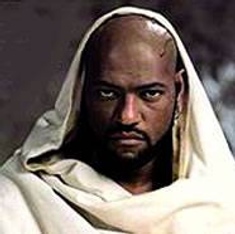
For more pictures and explanation refer to: Study Aid, with Visuals
For an interesting blog try this: OTHELLO, et. al.
You cannot discuss the characters, much less the plot, if you don't know what's going on. It is YOUR responsibility to find find a summary (for lack of a better word) of the play as a whole, and of each act. I will use the text of Shakespeare's play in class, with the focus on characters. You need to make sure you know WHO is WHO!!
NOTE: Classes are not "in sync." Be sure to read the post title.
Take what you already know about Shakespearean drama and add:
The AUDIENCE- composed of:
groundlings or penny-stinkers
Important [in large part for the same reason audiences are important today] because:
To the playwright:
On stage, two conventions developed:
An Aside
A Soliloquy
While the sets and special effects were limited, great concern was placed on costumes because
Language because
On Shakespeare's tragic heroes:
“Like Greek tragic heroes, Shakespeare’s protagonists are exceptional human beings whose stature makes their misfortune all the more dramatic. These characters pay a high price for their actions. . . . all lead to irreversible results. . . . Tragic heroes confront devastation; they command our respect and compassion, because they act in spite of terrifying risks. Their triumph is not measured by the attainment of what they seek but by the wisdom that defeat imposes on them.” ~ Michael Meyer
* Practical help in reading Shakespeare:
1. Do not rely solely on Spark Notes or No Fear Shakespeare; use them as they were intended, but remember, in class, in your essay, you will not be using either study aid.
2. Refer frequently to the list of characters called the dramatis personae listed and briefly described at the beginning of the play; in Othello, there are several significant characters, as well as minor characters; be sure you are familiar with:
Othello Roderigo Bianca
Desdemona Cassio
Iago Emilia
3. Pay attention to footnotes or allusions in the drama; if you do not understand a reference AFTER reading BOTH the play and your choice of study aid, ASK, but make a genuine effort to figure it out first
4. Don’t just rely on written study aids; try finding an audio file or recording of the play; hearing professional actors can enrich your understanding
5. AFTER reading the play, view a film of the performance. Try to resist the urge to watch a movie until after you have read the play; by then, perhaps, you will have formed your own ideas about the characters.
(NOTE: It is interesting to watch and listen to different actors to interpret the various roles--some may or may not fit a mental image you have of a particular character.)
Questions (from Michael Meyer, The Compact Bedford Introduction to Literature, 9th ed.):
1. Explain how Iago presents himself to the world. What is beneath the surface of his public identity? Why does he hate Othello so passionately? What makes Iago so effective at manipulating people? What do other characters, besides Othello, think of him?
2. Explain whether you think Othello could have protected himself from Iago’s schemes. What could Othello have done differently to avoid the suffering that ends the play? Is Iago to be blamed for everything, or must Othello shoulder some of the blame?
3. Explain why you think Othello’s racial background does or does not affect the events in the play.
4. Describe how the two settings, Venice and Cyprus, reflect different social and psychological environments as well as different behavior among the characters.
5. How does Othello change during the course of the play? Do you feel the same about him from beginning to end? Trace your response to his character as it develops, paying particular attention to Othello’s final speech.
6. Consider how women--Desdemona, Emilia, and Bianca--are presented in the play. What characteristics do they have in common? How do they relate to the men in their lives?
7. Despite its grinding emotional impact and bleak ending, Othello does have its humorous moments. Locate a scene that includes humor and describe its tone and function in the play.
Subscribe to:
Posts (Atom)